Kashmir – A History of failed Interlocutors
If the Indian Home Minister is to be believed, then a solution to the Kashmir problem is at hand. Home Minister P Chidambaram told a Parliamentary Consultative Committee1 in early December 2010 that the “contours of a political solution” to the Kashmir problem should emerge over the next few months. His confidence rested on the preliminary reports submitted by a three member Kashmir interlocutor team, which has been going around Jammu & Kashmir eliciting opinions from all sections of society, including politicians, students and intellectuals.
Knowing when not to talk
The ministry of external affairs press release of February 10, and our foreign secretary’s press conference of February 8, clearly indicate that the latter and her Pakistani counterpart agreed at Thimphu to resume the stalled India-Pakistan dialogue in a “composite” plus mode. Thus, while the press release reveals that the resumed dialogue would cover “all issues”, the foreign secretary, in her press conference, made out not only that the dialogue would be “comprehensive...
Scoring Self-Goals with Pakistan
We have decided to resume the so-called composite dialogue with Pakistan, without admitting as much. Why not be frank about the change in our position? Why resort to word play to obfuscate? If we are going to discuss counter-terrorism, peace and security, Kashmir, Siachen, Sir Creek, Wullar Barrage/Tulbul navigation project, people-to-people exchanges, trade, how does this agenda differ from that of the composite dialogue?
Kashmir–Deciphering Islamabad’s Signals
The message from Islamabad is gaining in decibel: the Generals want New Delhi to initiate talks with them on Kashmir. The latest in a string of couriers was former Pakistan Foreign Minister Khurshid Mahmud Kasuri, who urged Dr Manmohan Singh to travel to Islamabad for talks on Kashmir. Kasuri also suggested that a deal could be struck along the lines of the proposal floated some years ago by former dictator General Pervez Musharraf.
J&K: Need For a Bipartisan Consensus
The full might of the Indian Republic was on display on this 26th January. No, not just in the Republic Day Parade but even more prominently at Lal Chowk in Srinagar! The BJPs plan to hoist the Tricolour in Srinagar was torpedoed by the central and State government in an awe inspiring display of the state’s might. A complete special train load of Bhartiya Janata Party (BJP) workers from Karnataka were about turned even as they slept. Others, who tried to enter the state from Punjab, in their thousands, were intercepted and imprisoned.
Soft State Style Won’t Work In J&K
The turmoil in Kashmir continues and government’s nerve seems to be cracking. Curfews, police firings, dying protesters have not broken the momentum of the street protests. Pressure to find a “political” solution to the problem has increased, as if the government hasn’t tried to find one in the last 63 years with a frustrating lack of success.
Lose-Lose Situation
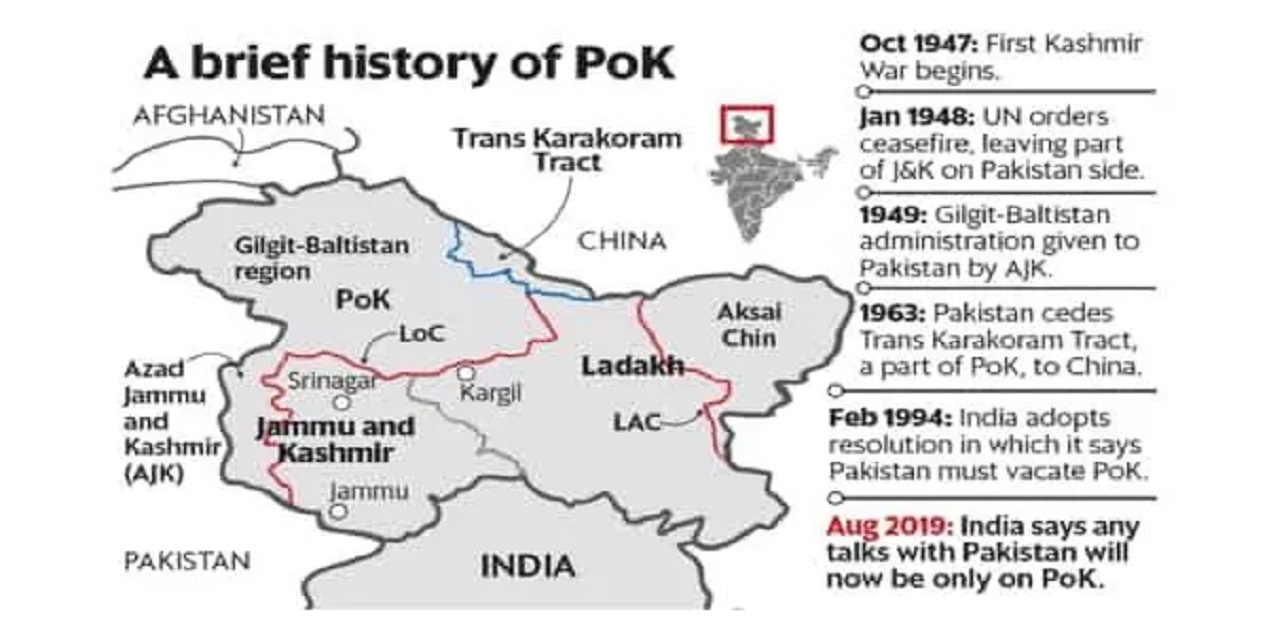
The Jammu and Kashmir problem has blighted our existence since independence, draining us politically, diplomatically and militarily. Who should be blamed for this depressing balance sheet and in what measure? The actors have been Pakistan, India and the Kashmiris. Pakistan has used various means to either wrest Kashmir from us or destabilize it
Getting ‘Stoned’ by the Stones
Since June, the stone-pelting in Kashmir seems to have left the Indian establishment stupefied. The government, both in the state and at the centre, has been reduced to a state of paralysis, almost as though they have been ‘stoned’ by the stones. To add to the confoundedness of the government, parachute journalists, with little sense of history and even less sense of reality, have been indulging in needless breast-beating about the situation in Kashmir and making recommendations, not to mention analyses, which are not just downright stupid but also dangerous, if not treasonous.
India is the Bigger Victim
The Jammu and Kashmir problem has imposed heavy political, diplomatic and military costs on India for the last 63 years. It has excessively conditioned our external relations, with much of our diplomacy occupied over the years with explaining to other countries our position on J&K, warding off criticism, countering propaganda, opposing moves or resolutions in international forums adverse to us.
Prime Minister’s Visit to J&K : June 7-8, 2010
Prime Minister, Dr. Manmohan Singh’s two day (June 7/8, 2010) visit to Srinagar is being generally described as rather uneventful. In UPA-II avatar, this was his second visit to the state, the earlier one being in October 2009. It may be mentioned that all such high profile visits from New Delhi to Srinagar have been traditionally, barring a few exceptions, accompanied by the hardliners’ call for Srinagar bandh. This visit of the PM was no exception.